 Boston, MassachusettsBoston, MassachusettsBoston, Massachusetts
Gloria Ganno, née Simon, lived in the New York Streets from 1944 to 1957, first on Florence Street—the rent was $15—later, Harrison Avenue. Her father was Lebanese, mother Italian—a singer in Bay Village clubs. She was 6 when her family moved in and a teenager when the neighborhood was razed. The family moved first to Columbia Point housing, which was isolated from stores and public transportation and near a trash dump.
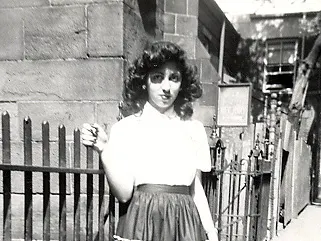
Gloria by fence, 1950s.
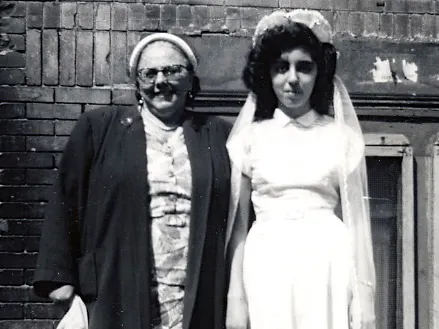
Gloria and her godmother, 1950s.
After the demolition, Gloria’s elderly landlady moved to Brookline to live with her son and was never the same. She was lonely, didn’t fit in, and missed her friends in the New York Streets, where she’d been proud to take care of herself and was financially independent.
In the New York Streets, Gloria said,
“We lived in a good time. I still miss it… We were used to everything, nothing seemed strange to us. We co-existed… People needed people back then. They didn’t need TV, they had live dramas. There was a tolerance for eccentricity: a woman neighbor used to stand outside in a pink slip and velvet hat and no one thought anything. You never knew what you’d see when you looked out the window.”
One of the BRA’s complaints about the New York Streets was that there were too many food stores, but the food was high quality and healthy. Stores sold fresh fruit and vegetables, meat, and fish. “We never ate so well as when we lived in the New York Streets.”
And bread has never tasted as good since then, Gloria always said.
The New York Streets were not really racially mixed, however. “People say you must have had a lot of Black friends, but not necessarily.”
Gloria was a “city girl”— kids didn’t pick on her. “I had a certain toughness.” In her twenties, she worked as a hat check girl at the Sherry Biltmore and told the story of a New York Streets loan shark, an old acquaintance, later killed by the mafia, who would come in and question whether she was still with her husband. “A connection that never leaves.”
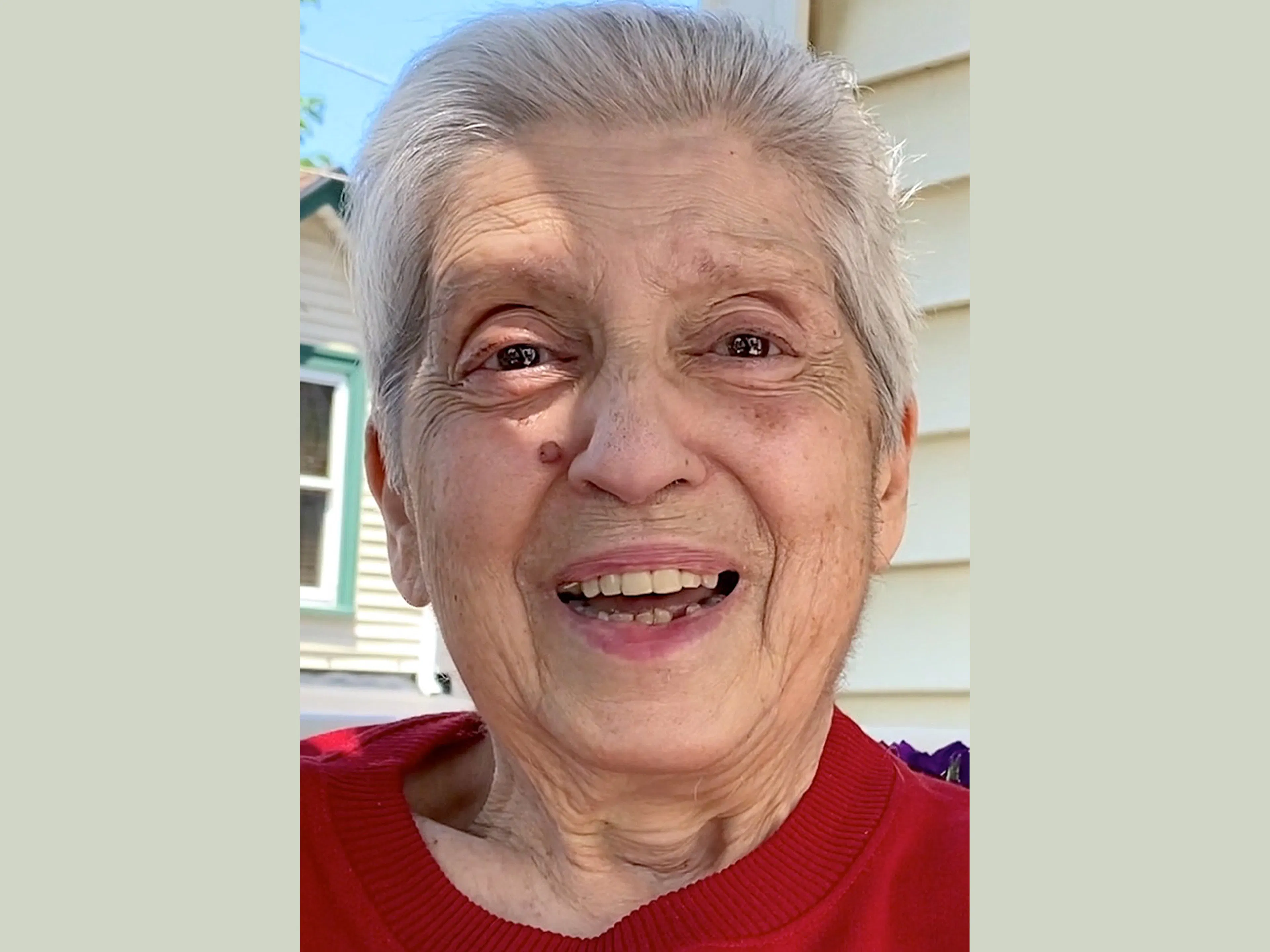
Gloria went on to earn a degree in business and worked for the Bank of Boston. She wrote several articles about the New York Streets and, as a member of the West End Museum, worked to provide insight into the city’s first Urban Renewal project; the West End was the second.
Until her death in 2025, Gloria lived in Hyde Park with her second husband, Bob Ganno.
— Gloria Ganno
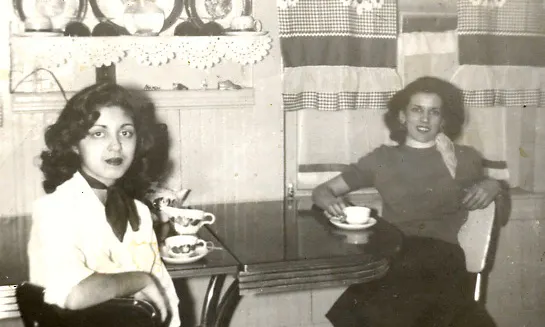
Gloria with her mother Helen in the kitchen of their New York Streets apartment, 1950s.